
Biography
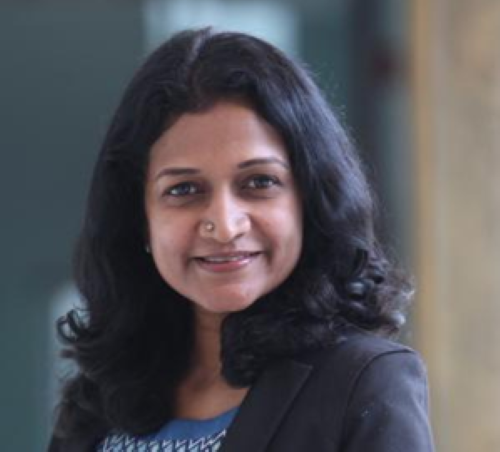
Puan Aishah Farha Mohd Raih is the Chief Information Security Officer (CISO) of Permodalan Nasional Berhad (PNB) and a recognised leader in cybersecurity, technology risk, data protection, and digital trust, with more than 25 years of experience spanning financial services, government, telecommunications, pharmaceuticals, and technology regulation across multiple jurisdictions. Throughout her career, she has spearheaded strategic cybersecurity, information risk, and governance initiatives within leading organisations including Saudi Arabia's Communications, Space and Technology Commission (CST), Malaysia's Prime Minister's Office, Standard Chartered Bank, Maxis, Novartis, and PNB. Her international experience has enabled organisations to strengthen cyber resilience, enhance governance frameworks, and confidently navigate complex digital transformation journeys. Puan Aishah has contributed significantly to the advancement of cybersecurity practices at both organisational and national levels. She played a key role in the development of Malaysia's National Information and Cybersecurity Risk Assessment Methodology and led a multi-country initiative to develop an information security handbook for Saudi Arabia's Communications, Space and Technology Commission. These achievements have helped strengthen cybersecurity governance and risk management capabilities across multiple sectors. A highly credentialed practitioner, she holds numerous professional certifications in information security, risk management, business continuity, and auditing. Her leadership has consistently delivered transformative improvements in governance, operational resilience, technology assurance, and data management, helping organisations balance innovation with security and trust. As a member of PNB's Corporate Leadership Team, Puan Aishah leads the organisation's cybersecurity and technology risk agenda, safeguarding one of Malaysia's premier investment institutions while supporting strategic business growth and digital innovation. She also contributes to the advancement of the profession through her involvement in ISO information security standards initiatives in Malaysia, helping shape industry best practices and governance standards. An alumna of Universiti Putra Malaysia (UPM) and an ELITE Fellow of Universiti Malaya (UM), Puan Aishah is passionate about developing future talent, strengthening industry-academia collaboration, and advancing the cybersecurity profession. Her contributions to thought leadership, governance, and professional development continue to influence the evolving landscape of cyber resilience and digital trust.
Abstract
This keynote explores the role of Human-Centered Artificial Intelligence (HCAI) in enabling sustainable and trustworthy digital transformation within Information Systems. As organizations increasingly adopt AI across sectors such as healthcare, education, and finance, the challenge has shifted from whether AI should be adopted to how it can be designed for meaningful human acceptance. Drawing on over fifteen years of research, the keynote highlights the importance of understanding human behaviour, designing for user adoption, and developing responsible and explainable AI systems. It introduces the TRUST Framework, which emphasizes Transparency, Responsibility, Usability, Sustainability, and Trustworthiness as the core principles for creating AI systems that people understand, trust, and are willing to use. Through real-world research examples, particularly in healthcare and digital well-being, the keynote demonstrates that successful AI implementation depends not only on technical performance but also on human values, ethical governance, and long-term societal impact.
Biography
Ts Dr. Vimala Balakrishnan is a Professor at the Faculty of Computer Science and Information Technology, Universiti Malaya. She holds a PhD in Ergonomics from Multimedia University and leads interdisciplinary research combining machine learning, deep learning, and data analytics with applications across social media, healthcare, and societal issues such as cyberbullying and misinformation. She has published over 100 peer-reviewed journal articles, holds multiple patents and copyrights, and has been recognized among the top 2% of scientists worldwide by Stanford University (2020–2025). To date, she has secured more than RM 4 million in total research grants as both Principal Investigator and Co-Investigator. Her awards include Malaysia Scopus Excellence Research Award (2024) and Fulbright Research Scholar (2018). She teaches undergraduate and postgraduate students, supervises PhD and Master students, and delivers lectures and keynotes at international universities.
Abstract
In 2024, AI has helped software engineers to write programs. In 2025, it helped software engineers design and develop software. In 2026, multi-agentic systems solve complex tasks with or without the intervention of software engineers. In this talk, we will look at how fast generative AI disrupted software engineering, and we will reflect on how to prepare for the next couple of years.
Biography
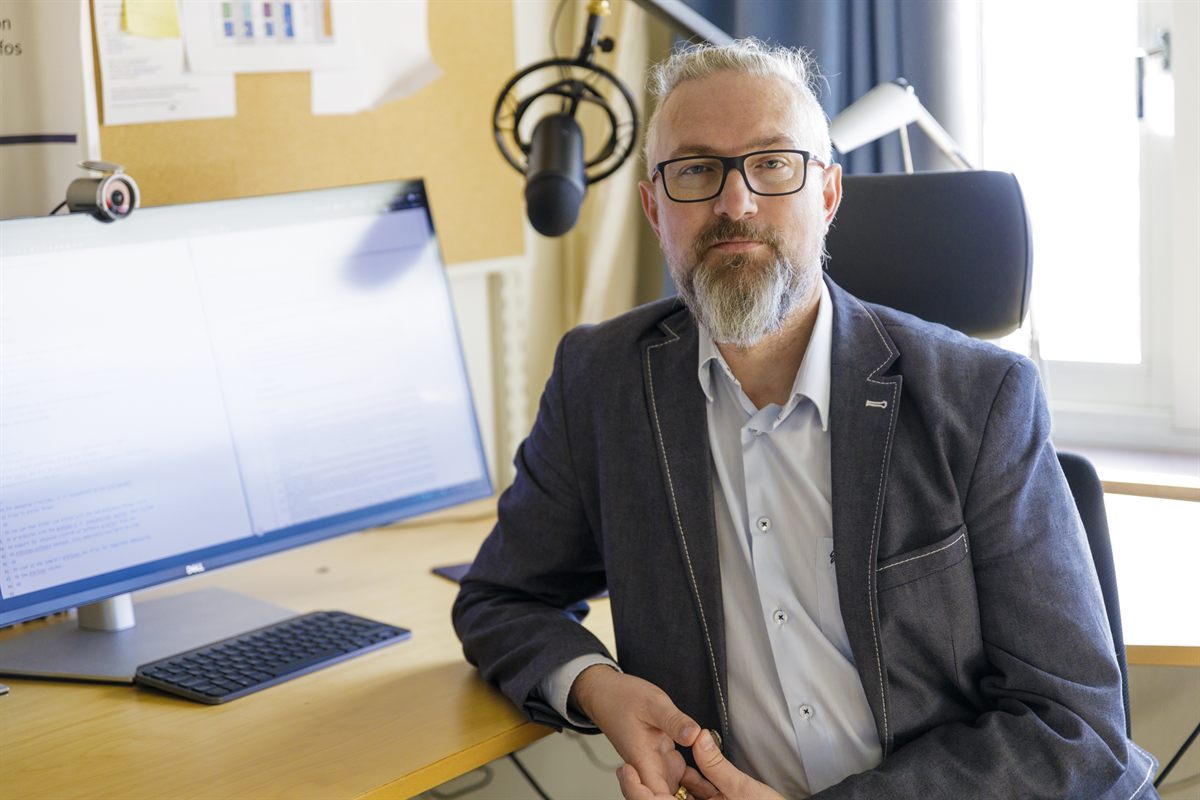
Miroslaw Staron is a Professor of Software Engineering at Chalmers | University of Gothenburg, Sweden. He previously served as the Deputy Dean of the IT Faculty and the Chairman of the AI Coordination Team at the university. An active leader in the European AI ecosystem, he has served as a board member for AI Sweden and AI Competence for Sweden. His research sits at the intersection of software architecture, agentic systems, and embedded software, supported by over 300 peer-reviewed scientific publications and a long-term role as a Visiting Scientist at Ericsson. He is the Editor-in-Chief of the Information and Software Technology journal and heads the Software Engineering for Embedded and Automotive Systems (SEAS) group.

Abstract
Software engineering is going through a fundamental shift. The bottleneck is no longer writing code by hand. As we enter into the AI-Native era of software engineering, i.e., AIWare, practitioners are learning that ad hoc prompting and random chat sessions with AI agents, also called Vibe Coding, fail to scale. Increasingly developers are expected to work more with their AI coding agents than their team members, AI-Human Collaboration. Given this paradigm is progressing through mostly trial and error, it is important to share the practices, tools and processes that work and that don’t. This talk shares our reflections and lessons of adopting spec-driven, architecture-centric development while engineering AI-powered public health digital apps. I will walk through different stages of our AI-Human collaborative engineering process, tools used for each stage, from researching product features, writing the initial specification to generating, testing, and reviewing AI-produced code while human engineers supervising their respective coding agents. To demonstrate how our approach works in practice, I’ll walk through different aspects of engineering two AI-powered apps for supporting digital health. We have packaged the lessons in a process-centric framework supporting AIWare for digital health products and services.
Biography
M. Ali Babar is a Professor in the School of Computer Science, University of Adelaide. He also served as the Director of Research (2019-2021) for the School of Computer Science. Prof Babar established a research centre, CREST - Centre for Research on Engineering Software Technologies, where he directs the R&DI activities of more than 20 (10 PhD students) academic staff, postdocs, HDR students on a wide variety of topics such as Software Security and Privacy, Distributed Ledger Technologies, Applied Data Science and Human-Centric Security & Privacy. Since late 2016, Prof Babar has attracted a significant amount of external R&D resources including more than $13 million cash funding as a PI for projects supported by government agencies like Defence Science and Technology (DST) Group, SA Health, Defence SA, DGov WA, and companies like Cyber Security CRC, D2D CRC, ACTewAGL, Jemena, NAB, ATO, TCS, TSS, Cisco, and Q-Labs. Prof Babar has obtained more than $20 million funding as PI or Co-PI over his research career in Australia and EU.